
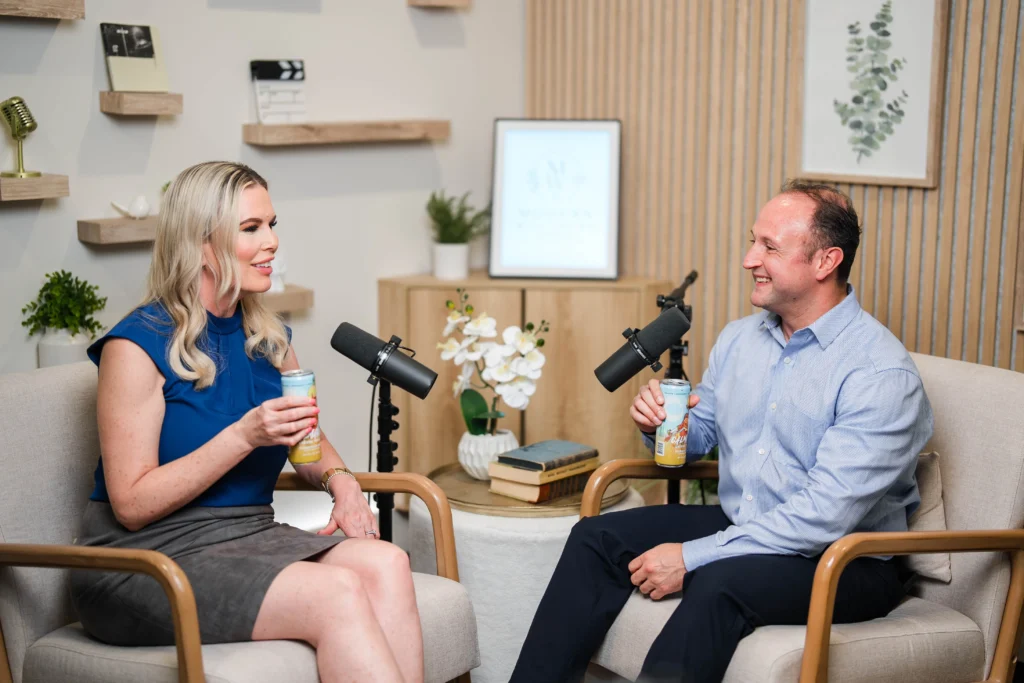
Modern Wellness, Episode 1, with Dawn Kirsten-Haque, NP
We are living longer than almost any generation before us, but we are not necessarily living better. The gap between those two things is the gap between lifespan and healthspan, and it is what this episode is about. Added years only count if you can use them. Medicine is very good at extending lifespan after disease appears. It is far less practiced at protecting healthspan across the twenty or thirty years of damage that come first.
I am an interventional cardiologist. Dawn Kirsten-Haque is a nurse practitioner certified in peptides, regenerative wellness, and bioidentical hormone replacement therapy. We have worked together for close to eight years in structural heart disease, and we started this show because by the time a patient reaches us, the process that put them there started decades earlier.
What is the difference between lifespan and healthspan?
Lifespan counts your years. Healthspan counts the years you can actually use: independent, strong, doing your own activities. Every argument in this episode comes back to that distinction, because the two numbers have been drifting apart for a generation.
What is the difference between Medicine 2.0 and Medicine 3.0?
Medicine 2.0 is what we practice in the hospital today. A patient gets sick, develops heart disease, seeks attention, gets diagnostic testing until we find the problem, and then we treat the problem. We are good at it, and we are arriving after the damage is done.
Medicine 3.0 asks how we reach people twenty or thirty years earlier and change what they are doing so they never arrive at all. Dawn put it in a single line at the end of the episode:
Medicine 3.0 is adding life to your years and not just adding years to your life.
Would you rather live to 95 or to 88?
This is the question I put to patients, and it does more work than any statistic.
Would you rather reach 95 years old but spend your last ten dependent on other people, on your loved ones, because from 85 you could no longer do things independently? Or reach 88 years old, fully independent, strong, able to do your own activities?
Nearly everyone chooses 88 in the room. Nearly everyone then lives as though they had chosen 95. Perhaps we should stop defining longevity as how many birthdays we can count, and start asking how much life we added to the years.
Should you fix fundamentals before taking supplements?
Yes, and it is not close.
Look at what fills a wellness feed: supplements, peptides, cold plunges, sauna protocols, stacks. My question back is always the same. What are we doing with the fundamentals before we start optimizing the margins? Why are you taking supplements, why are you doing peptides, if you are not doing the very basic fundamental things?
Stick to the fundamentals first. Then optimize the edges of what is left. The cold plunges, the sauna, the vitamins, the peptides: none of that matters if you have not cleaned up what is more important first.
The three I would change tomorrow
Sleep. Seven hours is the minimum before it becomes detrimental to your health, and I would target eight. Put the phone down well before bed. Leave two to three hours between your last food and sleep. Go to bed and wake at the same time daily so your biological clock sets. If someone sleeping four hours a night asks me for more energy, we fix the sleep before reaching for anything caffeinated.
Strength training. Start slow. Fifteen or twenty minutes a day, incline walking if you have never exercised. Then add anything you can pull or push, and build toward forty-five minutes to an hour.
Diet. Ultra-processed foods are killing our society. I am seeing patients arrive with heart attacks in their early thirties, forties, and fifties, and some do not survive. This was not happening twenty or thirty years ago.
The three Dawn would change
- Magnesium. In her words, “two thirds of the population is deficient in magnesium.” She recommends magnesium glycinate before bed.
- Vitamin D, optimal rather than normal. Her standard: “I would get them to optimal, which is 60 to 70 and not normal.”
- Hormones, particularly in women. That gets its own episode.
She also never hands a patient the full list. “If I say all 10 things that I want to say people are going to be done. They’re like just forget about it. Just let me die at age 65.” So she gives three. Take one if three is too many.
Why is muscle called your metabolic currency?
Muscle is the tissue that puts glucose to work. If you have insulin resistance, and you do not need to be diabetic to have it, that matters directly. Metabolic syndrome runs on the same machinery: waist circumference, blood pressure, cholesterol, visceral fat, inflammation.
Then there is the part almost nobody plans for. Sarcopenia is the loss of muscle mass. It begins right after your fifties and accelerates through the sixties, seventies, and eighties. Too little muscle leads to weakness, then hip fractures and falls, and at that point the mortality curve rises exponentially.
Which produces a conclusion most people find backwards: strength training matters more in your sixties, seventies, and eighties than in your twenties. It matters at every age, and it matters most exactly when most people stop.
For women after 40, Dawn’s guidance is to stop chasing cardiovascular volume: “you don’t need to run seven miles a day. It’s better to lift weights.” It does not have to be heavy weights.
Are peptides safe to take on your own?
No, not without bloodwork. This is the most important passage in the episode, and it comes from the person between us who is certified in them:
“If you have an underlying inflammation or cancer and you’re just taking a bunch of peptides that you saw an influencer taking online, you can really harm yourself because some of those peptides can increase the growth of the cancer cells and you can have a real problem. So you have to be careful. You have to look at labs. You have to look at baselines.”
Nothing here is one size fits all. Everybody’s biology and body chemistry is different, and what works for one person does not work for everybody.
Worth it, or wellness hype?
| Carlos | Dawn | |
| Cold plunge | Worth it. The benefit I notice first is mental. | Overhyped for women. Cortisol spike and hormone disruption, especially in perimenopause. |
| Creatine | Worth it. Form and dose matter more than timing. | Worth it. Data on muscle mass and on cognition. |
| 10,000 steps | Maybe. Fine at 5,000 if you strength train; not fine if you are sedentary. | Worth it. |
| 8 hours of sleep | Worth it. Seven is the floor. | Worth it, though not everyone needs eight. |
| GLP-1s in non-diabetics | Follow the data. No ten-year evidence yet. | Worth it. A real tool in the toolbox. |
GLP-1s are the drug class that includes semaglutide, approved for diabetes and weight loss and now used well beyond both. Where we agree completely: they can jumpstart a metabolic change, but if the fundamental habits underneath do not change, the weight returns when you come off.
Listen to Episode 1 of Modern Wellness for the full exchange on each of these.
Frequently asked questions
What is the difference between lifespan and healthspan? Lifespan is how many years you live. Healthspan is how many of those years you can use independently. Medicine 3.0 targets healthspan: adding life to your years rather than years to your life.
At what age should I start strength training? Now, at any age. But the period when it matters most is your sixties, seventies, and eighties, because sarcopenia begins accelerating after your fifties, which is precisely when most people stop training.
Is a “normal” vitamin D level good enough? Not by Dawn’s standard. She targets 60 to 70, which she calls optimal, and distinguishes that from a lab result merely flagged as normal.
Should women do cold plunges? Dawn advises against it for women, particularly in perimenopause and menopause, because of physiologic temperature stress and cortisol spikes. Carlos does them and finds them valuable, mainly for the mental training.
How much sleep do I actually need? Seven hours is the minimum before sleep loss becomes detrimental. Eight is the target. Consistency of bedtime and wake time matters as much as total hours.
Do I have to change everything at once? No, and you should not try. Pick one to three changes. Start with sleep, add fifteen minutes of resistance work, and get real bloodwork numbers rather than the word “normal.”
Listen to Modern Wellness Episode 1 for the full conversation, including the parts where we disagree.
Modern Wellness is hosted by Dr. Carlos E. Sanchez Soto, Founder of Calmara Beverage Company, Inc. and practicing Interventional Cardiologist, and Dawn Kirsten-Haque, NP. This episode is sponsored by Calmara.
Founded by Dr. Carlos E. Sanchez Soto, Calmara brings the same philosophy explored on Modern Wellness to functional energy: performance through balance, not overstimulation.
Meet Calmara — Pineapple Zen →
Nothing in this article is medical advice for your situation. Talk to your own clinician before changing medication, supplementation, or an exercise program.