Tattoo Removal in Upper Arlington, OH

Quick Facts

Fade or Remove Unwanted Ink With Tattoo Removal in Upper Arlington, OH

Tattoo removal is one of the few aesthetic treatments where the honest version of the pitch is more persuasive than the optimistic one. It takes multiple sessions across many months, some inks clear far more readily than others, and complete removal is not guaranteed for every tattoo.

At The Luxe MedSpa in Upper Arlington, OH, serving patients across Columbus and central Ohio, that assessment happens before you commit rather than after your third session. What you should leave a consultation with is a realistic session estimate for your specific tattoo and a clear view of what the end result is likely to look like.
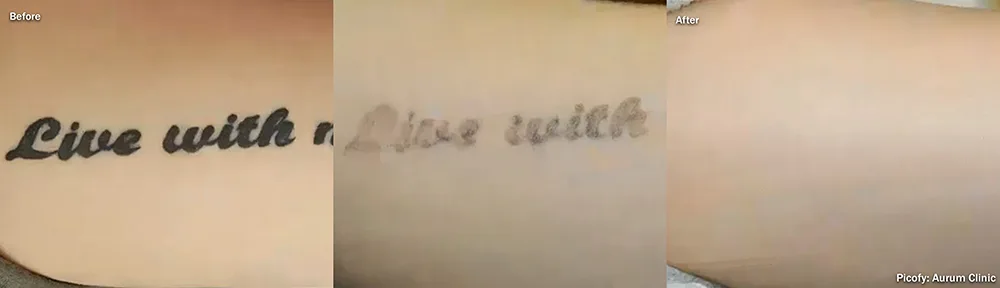
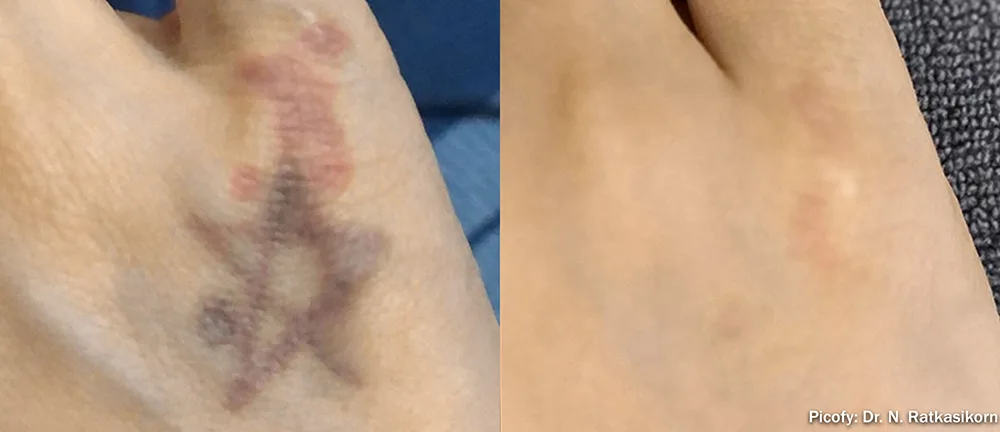
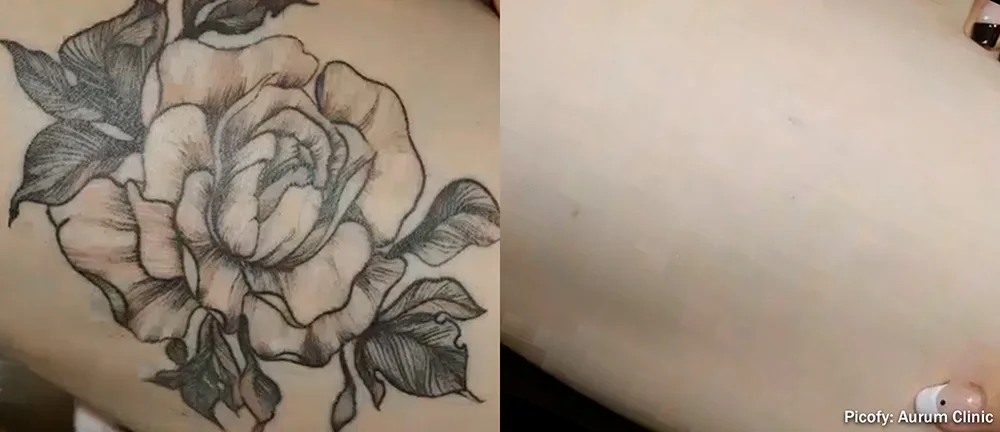
Tattoo Removal Before and After

Laser tattoo removal offered at The Luxe MedSpa in Upper Arlington, Columbus Ohio

What Is Laser Tattoo Removal?

Laser tattoo removal uses precisely targeted light energy to break up the ink particles held in your skin. Tattoo ink sits in the dermis, deeper than the layers that naturally shed, which is why a tattoo is permanent without intervention.
The laser delivers energy in extremely short pulses, absorbed by the ink rather than the surrounding tissue. That absorption shatters the particles into fragments small enough for your immune system to carry away, which is the part patients most often misunderstand: the laser does not remove the ink; your body does. The laser only makes the fragments small enough to be cleared.
That explains the timeline. Sessions are spaced six to eight weeks apart precisely because clearance is a biological process happening in the weeks between appointments, not during them. Rushing the interval does not speed up removal and increases the risk of skin reaction.

Benefits of Tattoo Removal in Columbus, OH

How Does Tattoo Removal Work Over a Course of Treatment?

Fading is progressive, and it is rarely even. The outer edges and the lightest areas of a tattoo generally clear first, while dense black areas and heavily saturated sections take longer. Many patients find the first two sessions produce the most visible change, and later sessions work on what remains.
Ink color is the single largest variable, and it is worth understanding before you begin. Black and dark blue absorb laser energy across the broadest range and clear most readily. Reds and oranges respond reasonably well. Greens and light blues are more stubborn. Yellow, white, and some pastel shades are the most resistant and may not clear completely at all.
Other factors affect the timeline too, including how old the tattoo is, how deep the ink was placed, whether it was applied professionally or amateur, where it sits on the body, and how efficiently your lymphatic system clears the fragments. Tattoos on the extremities generally take longer than those on the torso because circulation there is less efficient.
How laser tattoo removal works at The Luxe MedSpa in Upper Arlington, Columbus Ohio

Areas Tattoo Removal Treats

Tattoo removal can be performed almost anywhere on the body, though location affects both comfort and the number of sessions required. Areas with better circulation clear faster.
Arms
Among the most commonly treated areas and generally well tolerated.
Highly visible in professional settings, which is a frequent reason for removal.
Larger pieces here often need more sessions simply because of surface area.
Thinner skin over bone, so treatment here is more sensitive.
Well tolerated with good circulation, which supports clearance.
Slower to clear, as circulation in the extremities is less efficient.
Treated with attention to skin thickness, which varies across the area.
Good circulation and thicker skin generally make this a favorable area.
Highly visible and frequently prioritized, treated with care given the thinner skin.
Small pieces here are common and usually straightforward.
Treated conservatively, with careful assessment before any course begins.
Microbladed or tattooed brows, which require a different approach to body ink.
Permanent lip color, treated with particular care in a sensitive area.
Larger pieces treated across multiple sessions.
Generally well tolerated with reasonable clearance rates.
Common for larger work, with clearance typically slower than the torso.
Lower leg circulation means these often need more sessions.
The slowest areas to clear, and among the most sensitive to treat.

Who Tattoo Removal Is For

Good candidates are in good general health, have realistic expectations about the timeline, and understand that the number of sessions is an estimate rather than a promise. Patients who understand this are consistently the most satisfied with the outcome.

It also suits people who want partial rather than complete removal. Fading a tattoo for a cover-up generally takes considerably fewer sessions than clearing it entirely, so if a tattoo artist has told you a piece needs lightening first, that is a shorter and less expensive course than full removal.
Skin tone is a genuine consideration and one this page will not gloss over. Laser tattoo removal can be performed on deeper skin tones, but the risk of pigment change is higher, and it requires the right wavelength, conservative settings, and a provider who will tell you honestly if the risk is not acceptable for your skin. That assessment happens at consultation.
Treatment is not appropriate over active infection, sunburn, or open skin in the area. Recent isotretinoin use requires waiting, a history of keloid scarring needs careful assessment, and certain photosensitizing medications affect suitability. Tattoo removal is also avoided during pregnancy and breastfeeding.

Scarring and What to Expect Afterward

Modern laser tattoo removal is designed to target ink rather than surrounding tissue, which means significant scarring is uncommon when the treatment is performed correctly and the aftercare is followed. It is not impossible, and any page claiming zero risk is overselling.
The most common cause of scarring is not the laser. It is picking at blisters or scabs during healing, which is why aftercare matters as much on this treatment as anything we offer. Some patients also see temporary pigment change, either lighter or darker than surrounding skin, which usually resolves over months.

Immediately after a session, expect redness, swelling, and a frosting appearance over the treated area that settles within minutes to hours. Blistering is normal and not a complication. The area needs keeping clean, covered,d and out of the sun, and specific instructions are given at each appointment.
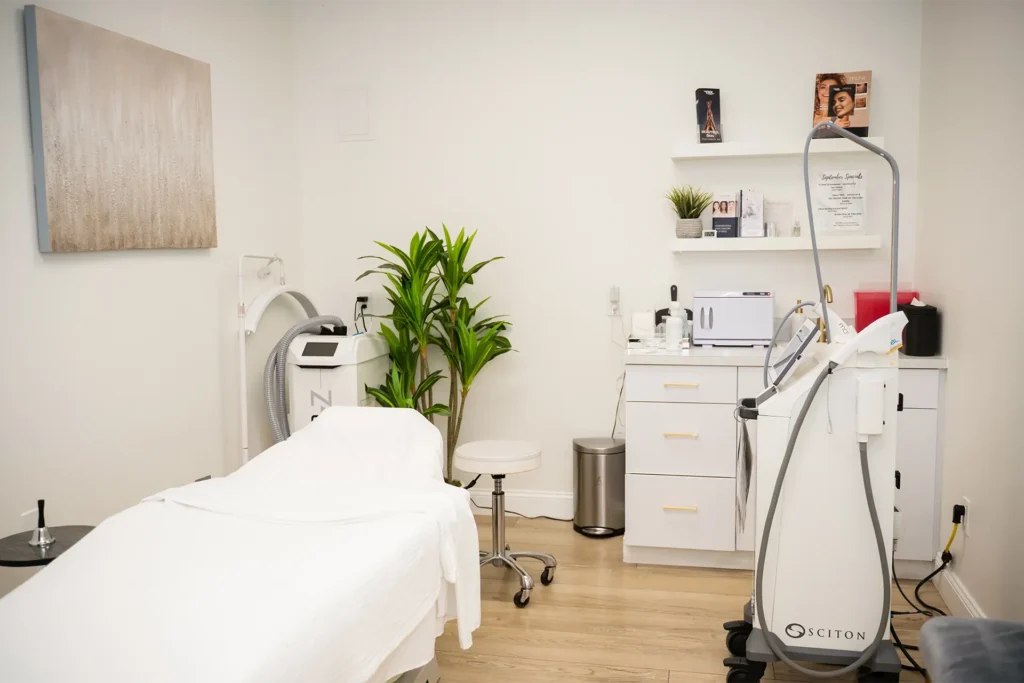
Treatment room at The Luxe MedSpa in Upper Arlington, where microneedling is performed

What Tattoo Removal Works Alongside

Tattoo removal is usually a standalone course rather than part of a plan. Several of our other treatments come up in the same conversation, though, either because patients ask about them or because they are relevant once a course completes.

Why Choose The Luxe MedSpa for Tattoo Removal in Upper Arlington, OH

Tattoo removal is a course of treatment rather than an appointment, which means you are choosing who you will see every six to eight weeks for the better part of a year. Honest expectation-setting at the start matters more here than on almost anything else.

Tattoo Removal Pricing and Payment Options

Tattoo removal is priced per session and scaled to the size of the tattoo, since a small piece behind the ear and a full sleeve involve very different amounts of time and energy. Because a full course involves multiple sessions, the useful number to discuss is the total rather than the individual visit.

Your estimated session count and total cost are given at consultation once your tattoo has been assessed. If your budget is a factor, say so, because partial fading and prioritizing one area over another are both legitimate ways to plan a course.

Areas We Serve

The Luxe MedSpa is located on Northwest Boulevard in Upper Arlington. We serve patients across the Columbus metropolitan area and central Ohio, with many traveling from the neighborhoods and suburbs listed below.

Frequently Asked Questions

How many sessions are needed for tattoo removal in Columbus, OH?

Most tattoos require 6–10 sessions, depending on the size, color, and depth of the ink. Your provider will recommend a personalized plan based on your tattoo and goals.
Treatments are typically spaced 6–8 weeks apart to allow proper healing and pigment clearance. Timing may be adjusted based on your skin’s response.
Discomfort is usually mild to moderate and can feel like a quick snapping sensation on the skin. Numbing options are available to help improve comfort during treatment.
Many colors can be treated, including black, blue, green, and purple. Some lighter or resistant pigments may require additional sessions.
Some tattoos can be fully removed, while others may be significantly faded, depending on the ink and skin response. Many patients choose fading for cover-up purposes.
Our Luxebux membership banks monthly funds toward any service with 10% or 15% off depending on tier, and funds never expire, which suits a treatment paid across many months. CareCredit and Cherry payment plans are also available and commonly used for removal courses.

Our Luxebux membership banks monthly funds toward any service with 10% or 15% off depending on tier, and funds never expire, which suits a treatment paid across many months. CareCredit and Cherry payment plans are also available and commonly used for removal courses.

Most tattoos need somewhere between six and twelve sessions. The range is genuinely wide, and it depends on factors specific to your tattoo: the ink colors involved, how old it is, how deeply the ink was placed, whether it was professional or amateur work, its size, and where it sits on your body.
You will be given an estimate at consultation, and it is an estimate rather than a guarantee. Partial fading for a cover-up generally takes considerably fewer sessions than complete removal, so tell us which outcome you want.
Significant scarring is uncommon when treatment is performed correctly and aftercare is followed, because the laser is designed to target ink rather than surrounding tissue. It is not impossible, and it would be wrong to tell you otherwise.
The most common cause of scarring is picking at blisters or scabs during healing rather than the laser itself, which is why the aftercare instructions matter so much on this treatment. Temporary pigment change, either lighter or darker than surrounding skin, is also possible and usually resolves over months. A history of keloid scarring
It can be, with the right wavelength and conservative settings, and this deserves a straight answer rather than a reassuring one. Laser tattoo removal carries a higher risk of pigment change in deeper skin tones, because the laser can affect the melanin in your skin as well as the ink in the tattoo.
That risk is managed through wavelength selection, lower energy settings, and longer intervals between sessions, which generally means a longer overall course. Where the risk is not acceptable for your skin, you will be told so directly at consultation rather than partway through a course.
Keep the area clean and covered as directed, apply the ointment you are given, and do not pick at blisters or scabs under any circumstances. That last one is the single most important instruction, since picking is the most common cause of scarring after an otherwise straightforward session.
Keep the treated area completely out of the sun between sessions and use broad-spectrum SPF once it has healed, as sun exposure on treated skin raises the risk of pigment change. Avoid swimming pools, hot tubs, and strenuous exercise for the first few days, and skip shaving or exfoliating the area while it heals.
Yes, and it is one of the more useful things we do. If a tattoo artist has told you a piece needs lightening before it can be covered, partial fading gives them a cleaner canvas and generally takes far fewer sessions than complete removal.
Tell us at consultation that fading rather than removal is the goal, and bring any guidance your artist has given you about how light the piece needs to be. Planning to a cover-up target rather than to clear skin changes both the session count and the cost.
Black and dark blue clear most readily, because they absorb laser energy across the broadest range of wavelengths. Reds and oranges respond reasonably well. Greens and light blues are more stubborn and typically need more sessions.
Yellow, white, and some pastel shades are the most resistant, and in some cases may not clear completely at all. If your tattoo contains those colors, you will be told what to expect before you begin rather than discovering it after several sessions.
Most patients describe it as uncomfortable rather than unbearable, and comparable to being snapped with a rubber band or having the tattoo done in the first place. Sessions are short, generally ten to thirty minutes depending on size, and comfort measures are available.
Discomfort varies with placement. Areas over bone such as the wrists, ankles, and ribs are more sensitive than the fleshier parts of the arms, back, or thighs.
Because the clearing happens between appointments rather than during the session, the laser fragments the ink; your immune system then carries those fragments away over the following weeks. That process needs time, and treating again before it has run its course does not speed up removal.
Shortening the interval also increases the risk of skin reaction and pigment change without improving the result. That is why the spacing is not something we negotiate on, even when patients would prefer to move faster.
Often, but not always, the honest answer depends on your specific tattoo. Many tattoos clear to the point where they are not noticeable. Others leave a faint shadow or a trace of the most resistant colors, particularly where yellow, white, or heavy pastel work is involved.
What you should get at consultation is a realistic view of what your end result is likely to look like, based on the ink colors in your piece and how it was applied. That is a more useful thing to know at the start than a guarantee nobody can honestly make.

Book a Tattoo Removal Consultation in Upper Arlington, OH

The most useful thing a consultation does for this treatment is set your expectations properly. You should leave knowing how many sessions your tattoo is likely to need, which colors will clear readily and which may not, and what the end result will realistically look like.

Call (614) 453-2056 or book your consultation at The Luxe MedSpa, 3025 Northwest Blvd, Upper Arlington, OH 43221. We see patients from across Columbus and central Ohio.

Menu